Tracking the information about your manuscript
Communicate with the editorial office
Query manuscript payment status Edit officeCollecting, editing, reviewing and other affairs offices
Managing manuscripts
Managing author information and external review Expert Information Expert officeOnline Review
Online Communication with the Editorial Department
Downloads
Page Views
Information
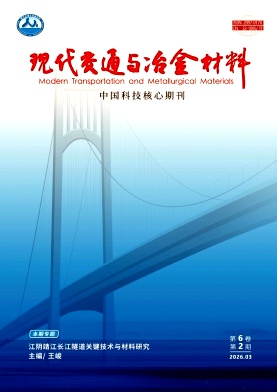
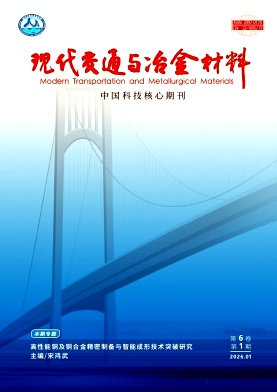
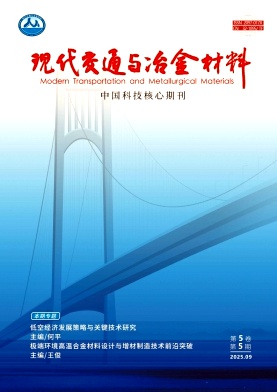
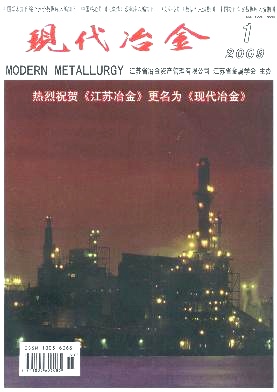
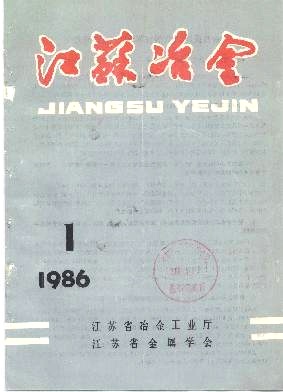
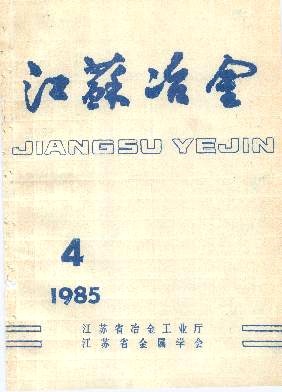
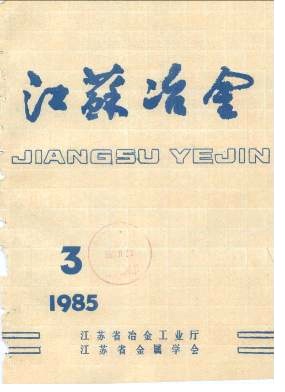
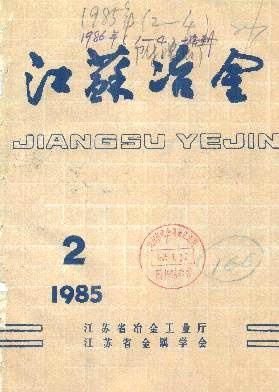
 Journal Title: Modern Transportation and Metallurgical Materials
Established: July 2021
Governing Authority: Jiangsu Association for Science and Technology
Sponsors: Jiangsu Provincial Comprehensive Transportation Society
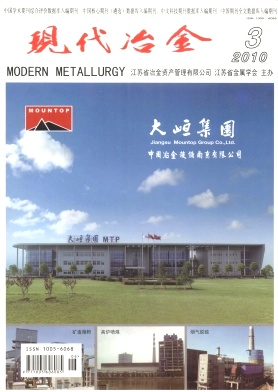
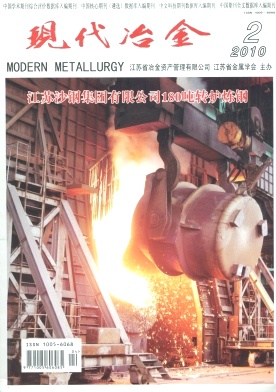
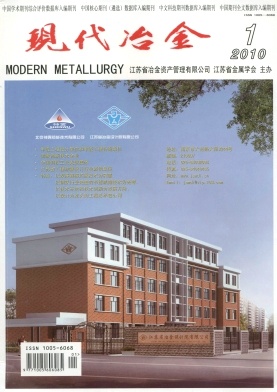
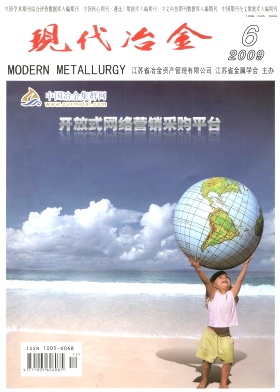
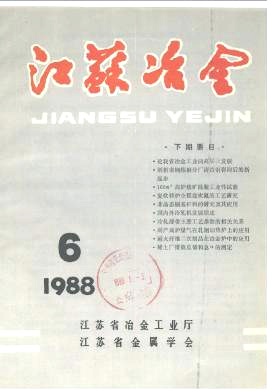
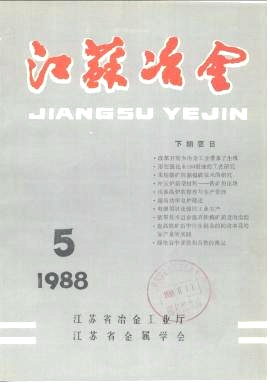
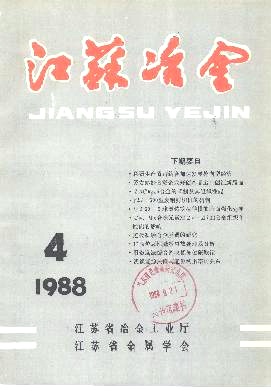
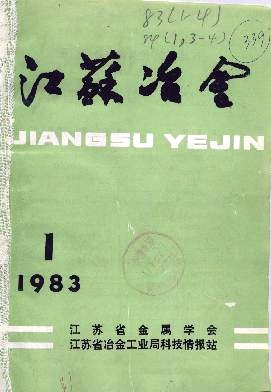
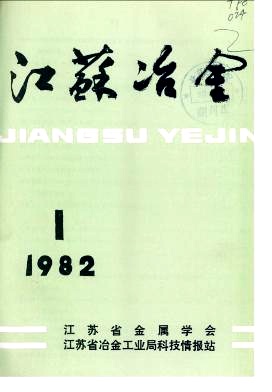
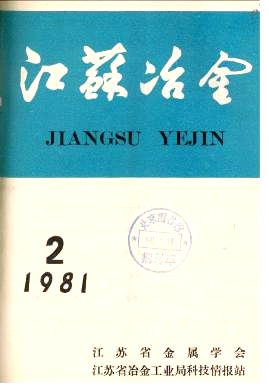
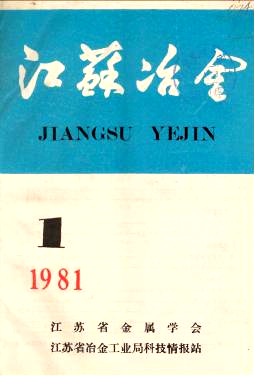
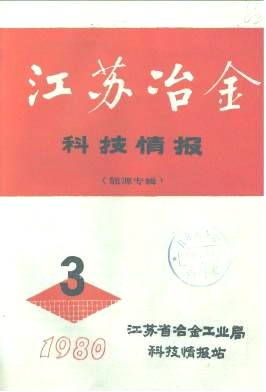
Jiangsu Provincial Society for Metals
Publication Frequency: Bimonthly
Tel: 025-58783287
Email: xdjtyyjcl@163.com
CN 32-1895/TF
ISSN 2097-017X
Freezing technology research and engineering practice of underground docking for ultra-large diameter shield tunnels in high water pressure and high permeability strata
CHEN Xiangsheng;WEI Daiwei;CHEN Hanqing;When ultra-large diameter shield tunnels docking in high-water-pressure, highly permeable strata, ground freezing reinforcement is a key technology determining the success or failure of the docking. However, it also faces numerous influencing factors, high potential risks, and significant construction difficulties. To date, there have been no successful cases worldwide available for reference. This makes the project highly pioneering and technically demanding, requiring precise control over freezing temperature, uniformity of ice wall formation, and real-time monitoring of ground deformation. Any deviation could compromise structural integrity or trigger ground subsidence. Moreover, the interaction between freezing pipes and complex geological conditions, such as high groundwater flow or variable stratum permeability, further complicates design and execution. Therefore, a robust theoretical model, validated through rigorous numerical simulation and scaled physical testing, is indispensable for risk mitigation and construction assurance. Therefore, this study, based on the Jiangyin-Jingjiang Yangtze River tunnel ultra-large diameter shield tunnel underwater docking project, focuses on the difficulty of shield tunnel docking projects in high-water-pressure, highly permeable strata. It investigates freezing design and construction techniques. The key technical aspects of the critical construction processes, including core sampling, drilling, grouting, and freezing of the 80 mm thick shield tunnel steel shell, are analyzed. A complete set of construction technology systems covering shield shell core sampling, precise positioning, orifice sealing, precision drilling, co-pipe grouting, and asynchronous freezing is formed. The research results have been successfully applied to engineering practice. Monitoring of the freezing temperature field and frost heave displacement field revealed that after 54 days of active freezing, a frozen wall with an effective thickness of 4.62 m and an average temperature of-14.47 ℃ formed on the shield docking section. This not only meets the reinforcement requirements of the surrounding soil for shield structure dismantling and subsequent concrete pouring, but also satisfies the requirements of bearing capacity and water sealing performance for the excavation of the shield docking section. Simultaneously, the maximum frost heave displacement of the shield arch is found to be 10.14 mm, far less than the design threshold of 100 mm, ensuring structural safety and stability during construction.
Prediction of aging performance of waterproof sealing gasket in shield tunnel under compression service state
XIAO Mingqing;WANG Shimin;XIE Hongming;YAN Rui;ZHANG Yi;Rubber gaskets are usually adopted as the primary waterproof structure for segment joints in shield tunnels, and their waterproof function is realized by the generation of compressive stress. However, during the service life of tunnels, the performance degradation of rubber materials dominated by thermal-oxidative aging exerts a significant impact on the waterproof performance of the gaskets. To ensure the long-term waterproof safety of shield tunnels, this paper, based on the segment joint waterproof system of the Jiangyin-Jingjiang Yangtze River Tunnel, carries out aging performance tests on gaskets under compressed service conditions. A real-time monitoring and feedback system is employed to investigate the degradation laws of aging performance for gaskets with different cross-section configurations under compression. The test results show that the aging processes of finished segment specimens of gaskets with different cross-sections differ considerably and exhibit obvious fluctuations. The Arrhenius extrapolation model curves for the outer and inner gaskets are obtained through fitting. On this basis, their service lives at 23 °C(room temperature) when the stress relaxation reaches 50% are predicted to be 153.1 years and 138.5 years, respectively, both of which meet the waterproof design requirements for the 100-year service life of the Jiangyin-Jingjiang Yangtze River Tunnel.
Research on integrated technologies for efficient smoke extraction, rapid evacuation, and structural fire protection in the Jiangyin-Jingjiang Yangtze River Tunnel
ZI Yi;XUE Guangqiao;LU Zhipeng;XIE Baochao;In view of the special engineering characteristics of the Jiangyin-Jingjiang Yangtze River Tunnel, which has a long length, a high water pressure and a large diameter, this paper proposes and validates the "ventilation-evacuation-fire prevention" integrated technical system. For smoke extraction, longitudinal ventilation is used in normal conditions, while centralized extraction operates during congestion. With exhaust vents at 60-meter intervals and 180 m3/s extraction rate, smoke is effectively controlled. The evacuation system combines longitudinal and transverse passageways with staircases every 80 meters, ensuring safe evacuation within 13 minutes under severe fire scenarios. For structural protection, fire protection layer thickness is based on equivalent thermal resistance, while nonenclosed linings and lightweight fire-resistant smoke duct panels enhance safety and enable maintenance-free operation.
Prediction and control of cracking risks in ultra-large-diameter precast shield segments
CHEN Wen;NI Chenxin;JIANG Qian;YANG Rui;YU Cheng;Jiangsu Transportation Engineering Construction Bureau;As the primary load-bearing component of tunnels, the shield segment critically influences the overall construction quality of tunnel projects. However, with the continual increase of diameter and thickness, these segments are becoming more susceptible to cracking during steam curing, posing a potential threat to the structural safety of tunnel. Based on the Jiangyin–Jingjiang Yangtze River Tunnel project, a multi-field coupling model is employed in this study to quantitatively assess the cracking risk of ultra-large diameter shield segments. The results show that the cracking risk of segments mainly comes from the temperature difference between the surface and the environment and between the inside and outside. The cracking risk can be significantly reduced by implementing the following measures, namely, reducing the adiabatic temperature rise of the segments, reducing the steam curing temperature, or incorporating nano C-S-H crystal seed. The study provides a theoretical foundation for producing high-performance shield segments for the Jiangyin–Jingjiang Yangtze River Tunnel project and contributes to the technical expertise required for future construction of ultra-large-diameter shield tunnels under high water pressure in China.




News
